Your Second Skin: How Clothing Shapes Identity in the Modern Era
What we wear is more than fabric stitched into form. It’s a second skin—a visual language we speak before we say a word. In the modern era, where individuality is both celebrated and scrutinized, clothing has become one of the most powerful ways to express who we are and how we see ourselves in the world.
In a time when first impressions often happen in seconds, the clothes we choose become a statement of alignment. They reveal our priorities, our tastes, and even our inner narratives. This isn’t about trends or dressing to impress. It’s about clarity—wearing something that reflects identity without needing to explain it. That reflection may be sharp, refined, minimalist, experimental, structured, or fluid, but it is always revealing something deeper.
Our clothing choices hold emotional weight. They can influence mood, behavior, and confidence. The right fit and fabric can change how we carry ourselves, how we move, and how we interact with others. A well-considered outfit can feel like a shield, a celebration, or a form of silent communication. It’s more than style—it’s a tool of psychological alignment.
In many ways, clothing mirrors evolution. As we grow, our style changes with us—shaped by new experiences, aspirations, and revelations. What once felt bold may one day feel quiet. What once seemed safe may suddenly feel empowering. This evolution doesn’t mean past choices were wrong. It simply means we’ve become more ourselves. Our second skin updates as we do, helping us shed what no longer fits and step into what does.
The modern era has brought new layers to how we define identity. With more freedom to explore expression across gender, culture, and taste, clothing has emerged as one of the few mediums that can hold all these truths at once. It adapts without judgment. It gives us a place to experiment, to discover, and to be seen in ways that words sometimes cannot manage.
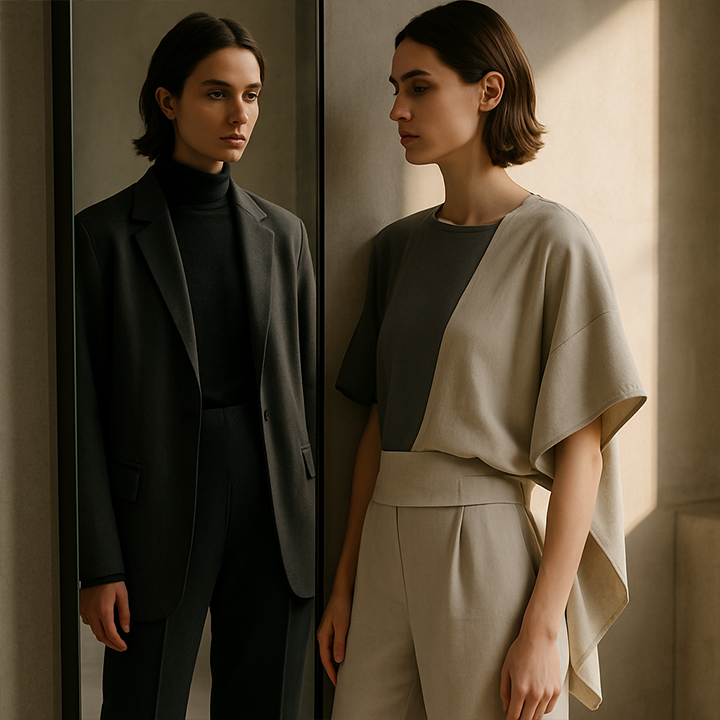
Minimalism, structure, and intentionality have become hallmarks of this new identity-driven fashion. Gone are the days when complexity meant value. Today, simplicity carries strength. Clean lines speak volumes. Subtle design choices—an asymmetrical hem, a well-placed fold, an unexpected silhouette—can feel more personal than an entire statement outfit. It’s not about doing more. It’s about doing what’s true.
Clothing also carries memory. There are pieces that remind us of beginnings, transitions, and quiet victories. A jacket worn during a defining conversation. A layer that wrapped you during a turning point. Fabric can become a timestamp in the archive of your personal evolution. And that memory, embedded into the garment, carries identity forward.
Another dimension of clothing-as-identity is its relationship with control. In a world where so much lies outside our grasp, the way we dress is something we own. It’s a moment of choice each morning. A ritual of curation that brings intention to the day. This small act—deciding what to wear—becomes a larger declaration of presence. A way to step into the world on your terms.
Modern fashion, especially when designed with restraint and purpose, aligns seamlessly with this mindset. It doesn’t shout. It doesn’t chase validation. It holds space for the person inside to take the spotlight. There is power in wearing something that doesn’t demand attention but commands it through quiet strength. That’s the kind of presence clothing can create—one rooted in self-awareness rather than spectacle.
When we treat clothing as a second skin, we begin to value not just how it looks, but how it feels. The comfort of texture, the ease of movement, the way a piece falls naturally on the body—all these sensory details contribute to identity. Because who we are is not just visual. It’s visceral. We feel our choices, and they either align—or they distract.
In the end, identity isn’t about finding one fixed version of yourself. It’s about continuing to discover who you are becoming. Clothing, when chosen with care, becomes a companion in that journey. It reflects the silent shifts, the bold steps, and the quiet returns. It wraps around our intentions and meets us at our edge.
In the modern era, where meaning matters more than mimicry, the clothes we wear are no longer just items—they’re insights. They offer a second skin that doesn’t just protect, but reveals. And when worn with purpose, they don’t just shape how others see us—they shape how we see ourselves.